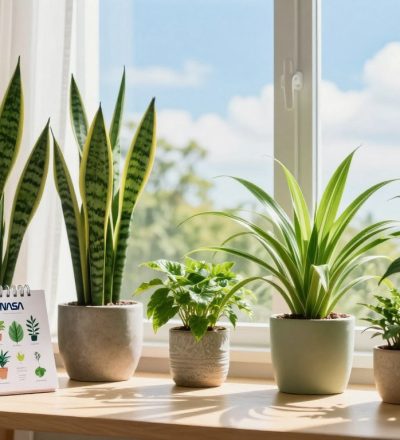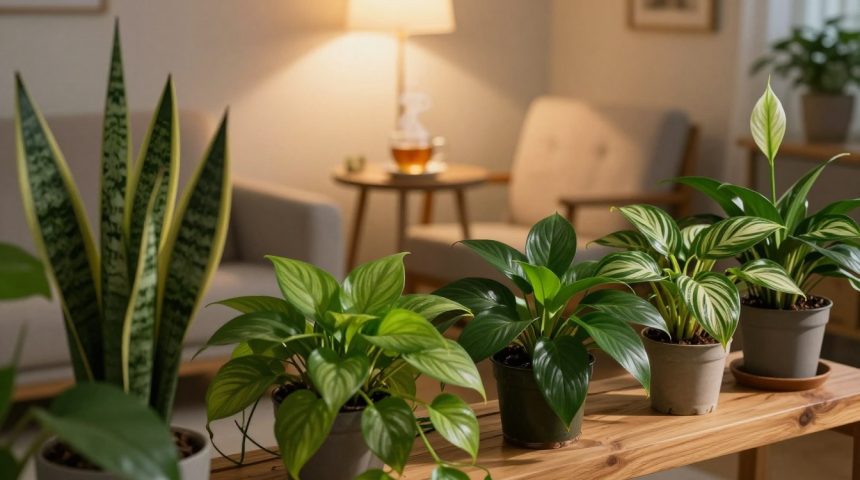
Dark rooms can feel lifeless. Finding plants that grow well without sunlight is tough. It’s hard to keep a garden alive in a shadowy apartment.
But, we found some low light indoor plants for homes that do great in dark spots. These plants add color to the quietest corners of our homes. They turn forgotten areas into lively spaces.
Adding plants to your home does more than look good. They improve air quality and make us feel much more relaxed. A simple leaf can turn a dull office into a fresh haven.
Lush leaves bring a natural feel even with few windows. Our guide will help you pick the right plants for your space. We aim to help you create a cozy home with nature.
Key Takeaways
- Enhance your home’s air quality naturally.
- Transform dark corners with hardy greenery.
- Select foliage that survives with minimal sun.
- Boost your daily mood with lush leaves.
- Discover easy care tips for dim rooms.
- Create a sanctuary in any windowless area.
Why We Love Low Light Indoor Plants
We love low light indoor plants because they can grow well in places where others can’t. They are not just pretty; they also make our homes better.
One big reason we love them is how easy they are to care for. Unlike other plants, they don’t need a lot of attention or special conditions.
These plants are great at cleaning the air. They take in pollutants and toxins, making the air in our homes cleaner. This is really helpful in cities where the air is often polluted.
Also, having plants around can make us feel better. Studies show that plants can lower stress and make us happier.
- Improved air quality through the removal of toxins and pollutants.
- Low maintenance, making them perfect for busy homeowners.
- Aesthetic appeal, adding a touch of nature and beauty to our living spaces.
- Psychological benefits, including reduced stress and improved mental well-being.
In conclusion, low light indoor plants are great for any home. They make our homes look better and feel healthier. By adding these plants, we can make our homes more welcoming and healthy for everyone.
Understanding Light Conditions in Your Home
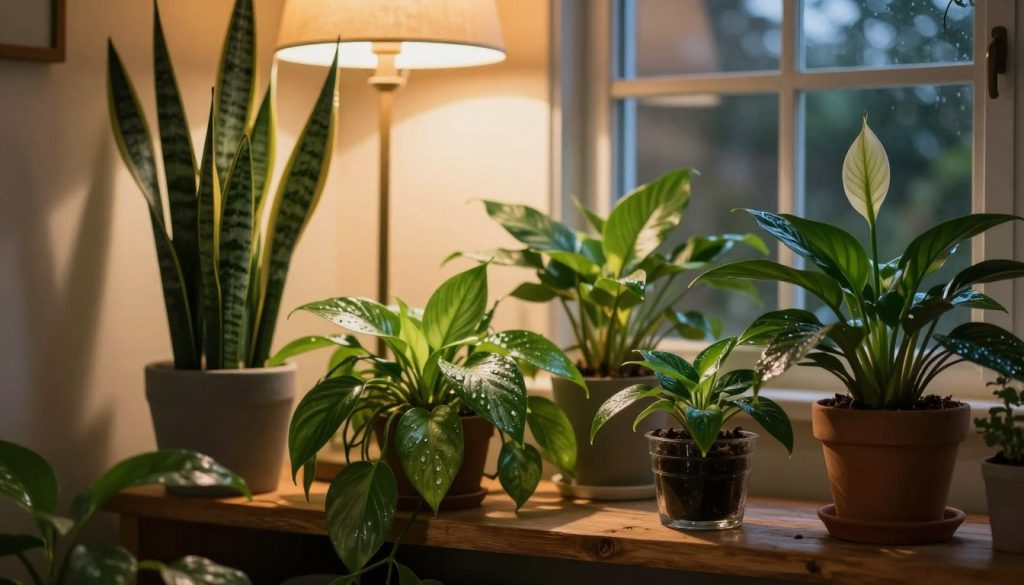
The success of your indoor plants depends on knowing the light they get. We often forget to check the light in our homes before picking plants.
Different rooms get different amounts of light. It’s key to pick the right plants for each room’s light.
To check your home’s light, watch the rooms at different times. See how the light changes from morning to night.
Rooms with direct sunlight for more than 4-6 hours are very bright. Rooms with little light, like those facing north or with small windows, are best for low light plants.
For a precise check, use a light meter. This tool shows the exact light intensity in your home. Knowing the light intensity helps choose the right plants.
Categorizing Light Conditions
Light conditions fall into three main types: bright, medium, and low.
- Bright Light: Direct sunlight for more than 4-6 hours.
- Medium Light: Filtered sunlight or indirect light for most of the day.
- Low Light: Limited natural light, often found in rooms without direct sunlight.
| Light Condition | Description | Suitable Plants |
|---|---|---|
| Bright Light | Direct sunlight for more than 4-6 hours | Succulents, Cacti |
| Medium Light | Filtered or indirect sunlight | Pothos, Dracaena |
| Low Light | Limited natural light | Snake Plant, ZZ Plant |
By understanding and categorizing your home’s light, you can choose the right low light plants. They will thrive in your space.
Top Low Light Indoor Plants for Every Room
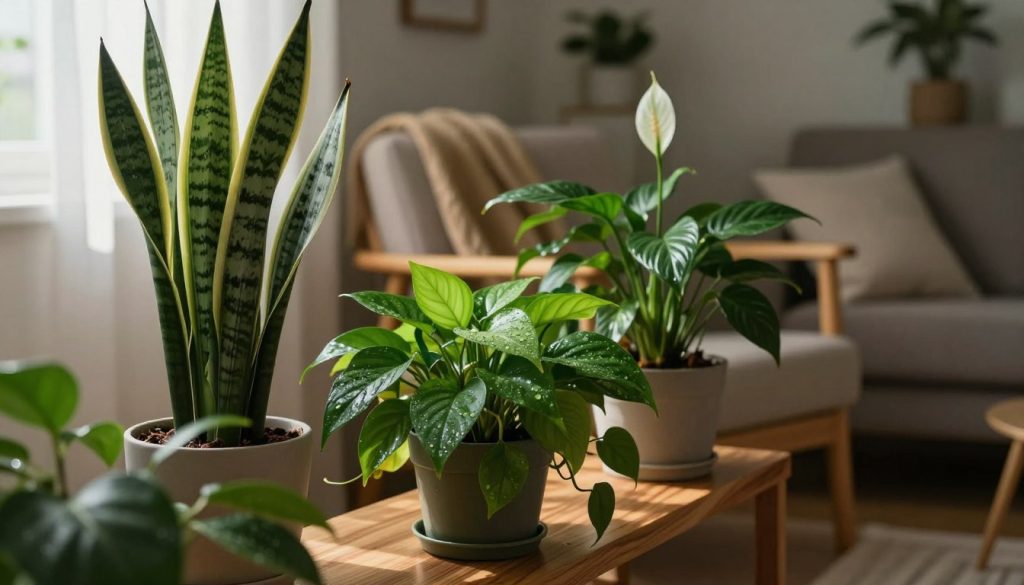
We can turn dark spaces into green havens with the right plants. Whether it’s your living room, bedroom, or office, there are many choices. Here are some top picks for low light indoor plants for your home.
Snake Plant
The Snake Plant is great for purifying air and growing in low light. It’s easy to care for, needing water only sometimes. This plant can grow up to 4 feet tall and is almost impossible to kill.
ZZ Plant
The ZZ Plant is perfect for those who forget to water their plants. It’s also good at cleaning the air. This makes it a great choice for anyone, even those new to plants.
Pothos
Pothos is a versatile plant that does well in low light. It’s easy to care for and can be trained to climb. Pothos is perfect for hanging baskets or pots.
Peace Lily
The Peace Lily blooms in low light and purifies the air. It prefers well-draining soil and moderate watering. This plant is a beautiful addition to any room.
Cast Iron Plant
The Cast Iron Plant is easy to care for and can handle low light and infrequent watering. It’s great for those who often forget to water. This plant has stunning, dark green leaves.
Essential Care Tips for Dimly Lit Spaces
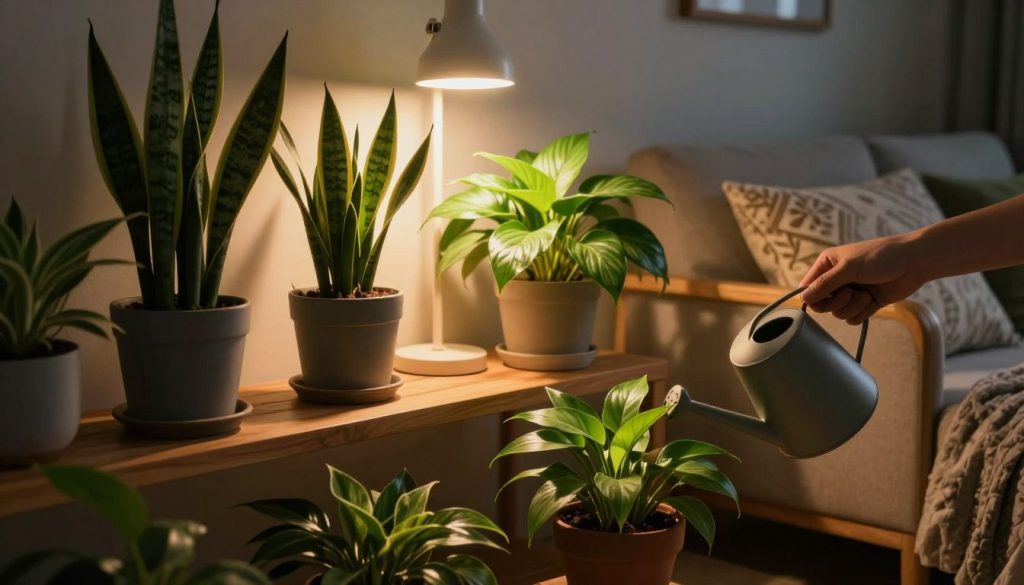
Thriving in low light requires a few key care tips. These strategies help your plants stay healthy and bright, even in dark spots.
Watering Habits for Low Light
Watering is vital for low light indoor plants. Avoid overwatering, which can cause root rot. Check soil moisture by feeling it with your finger. If it’s dry, it’s time to water.
Adjust your watering based on the season. Plants need less water in winter when they’re dormant. Water them once a month during this time.
| Season | Watering Frequency | Soil Moisture Check |
|---|---|---|
| Spring/Summer | Once a week | Check soil moisture every 3-4 days |
| Fall/Winter | Once a month | Check soil moisture every 7-10 days |
Managing Humidity and Airflow
Low light indoor plants love humid air, between 40-60% relative humidity. To keep humidity right, use a tray with water and pebbles or a humidifier.
Good airflow is also key. Make sure plants have enough space for air to move. This prevents fungal diseases in stale air.
Follow these care tips to create the best environment for your low light indoor plants. Be observant and adjust your care as needed based on your plant’s response.
Common Mistakes to Avoid When Growing Plants Indoors
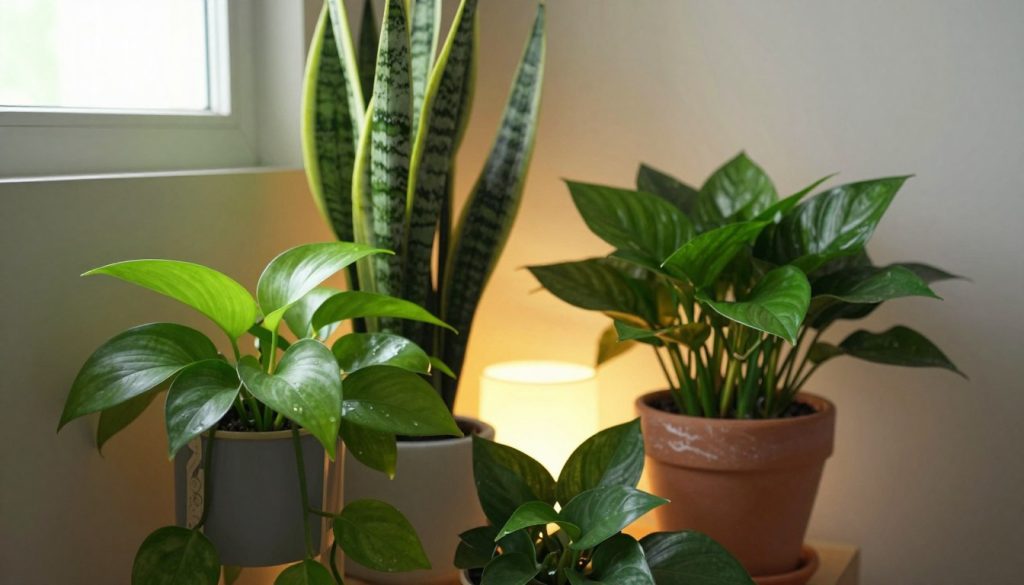
Growing plants indoors in low light can be tough. There are many common mistakes to steer clear of. Even with good intentions, we can harm our plants.
Overwatering is a big mistake. It’s easy to water too much, thinking the soil is dry. But too much water can cause root rot. On the flip side, underwatering is also bad. Plants need enough moisture to live.
To avoid these errors, know what your plants need. A simple way to check if they need water is to stick your finger into the soil. Go up to the first knuckle to see.
Here are some common mistakes to avoid when growing low light indoor plants for homes:
| Mistake | Consequence | Solution |
|---|---|---|
| Overwatering | Root rot, fungal diseases | Check soil moisture before watering |
| Underwatering | Dry leaves, stunted growth | Water thoroughly, but avoid overwatering |
| Insufficient Humidity | Dry leaves, pest infestations | Use a humidifier or group plants together |
Knowing these common mistakes helps our plants thrive. Regular checks and care adjustments can greatly improve their health and life span.
Creative Ways to Display Your Greenery
Displaying low light indoor plants is an art that can make any room look better. With a bit of creativity, you can turn your plants into beautiful decorative pieces. They not only clean the air but also bring nature indoors.
One great way to show off your plants is with hanging planters. Hanging planters add a fun touch to your rooms, using your ceiling space well. You can pick from materials like macramé, ceramic, or woven baskets to fit your style.
Creating a terrarium is another creative way to display your plants. Terrariums are small indoor gardens in glass containers, perfect for low light plants. They’re beautiful and easy to care for, great for those with busy lives.
As the famous interior designer,
“Plants are not just for decoration; they’re a way to bring life into your home.” –
Using decorative pots and planters that match your home’s look can also make your plants stand out. Look for planters with unique shapes, colors, or textures to add interest.
Here are some more ideas to get you started:
- Use a plant stand to elevate your plants and create a visually appealing display.
- Create a green wall using a trellis or a wall-mounted planter to maximize space.
- Group plants together to create a mini indoor garden that adds a lush, tropical feel to your room.
By using these creative display ideas, you can enjoy the beauty and benefits of low light indoor plants. They can also make your living spaces look better.
Troubleshooting Common Plant Health Issues
Low light indoor plants face many health problems. But, with the right tips, you can help them stay healthy. We’ll look at pests, diseases, and nutrient deficiencies. You’ll learn how to spot and fix these issues.
When you grow low light indoor plants for homes, watch out for health issues. These can be pests, diseases, or nutrient deficiencies.
Common Health Issues
Pests like spider mites, mealybugs, and scale are common. They harm plants by sucking sap and spreading disease.
Diseases in low light indoor plants often come from too much water, bad air, or high humidity. Root rot, leaf spot, and crown rot are examples.
Nutrient shortages can also hurt low light indoor plants for homes. Lack of nitrogen, iron, or magnesium can turn leaves yellow or stunt growth.
Troubleshooting Tips
To solve these problems, first figure out what’s wrong. Then, take steps to fix it.
Start by checking your plants for pests, diseases, or nutrient issues.
After finding the problem, act on it. For pests, use insecticidal soap or neem oil. For diseases, improve air, water less, and use fungicides if needed. For nutrient shortages, use a balanced fertilizer.
Preventive Measures
Preventing problems is better than fixing them. Keep your low light indoor plants for homes healthy by ensuring good air, watering right, and fertilizing often.
| Issue | Prevention | Treatment |
|---|---|---|
| Pests | Inspect plants regularly, maintain good hygiene | Insecticidal soap, neem oil |
| Diseases | Improve air circulation, avoid overwatering | Fungicides, reduce watering |
| Nutrient Deficiencies | Fertilize regularly | Balanced fertilizer |
By using these tips and preventive steps, you can keep your low light indoor plants for homes healthy and thriving.
Conclusion
Low light indoor plants can make any room feel alive and peaceful. They thrive in dim spaces, turning them into lush oases. By picking the right plants for your home’s light, you can create a beautiful environment.
These plants are great for cleaning the air and are easy to care for. With a little care, they can add natural beauty to your home. They’re perfect for anyone who wants to bring some green into their life.
Ready to start your indoor gardening adventure? Whether you’re new to plants or have experience, there’s a world of low light plants waiting for you. By growing these plants, you’ll make your home better and help the planet too.